
It is one of the most frustrating things in a home. You scrub, you wipe, you spray, and the room smells wonderful. Then a day or two later, the same old odor is back as if you never cleaned at all. You are not imagining it, and you are not doing it wrong. You are just treating the symptom instead of the source.
The smell was never really gone
Most cleaning makes a room smell better in two ways: it removes some surface grime, and it adds a pleasant cleaning-product fragrance. But if the actual source of the odor is still there, soaked into a couch, trapped in a carpet, living in a filter, or feeding bacteria in a damp spot, then you only covered it. When the cleaning-product scent fades, the original smell returns on schedule. That is masking, explained in full in neutralizing vs. masking.
Where the source usually hides
Odors come back because the thing producing them survived the clean. The usual hiding spots are the porous, hard-to-wash places:
- Upholstery, mattresses, and cushions that absorbed sweat and oils. See how to deodorize a mattress and upholstery.
- Carpet and rugs.
- Filters and air systems that recirculate the smell every time they run.
For the full map of what actually produces household smells, see what actually causes bad smells in your home.
How to break the cycle
- Find the source. Track the smell to the specific fabric, spot, or filter producing it instead of treating the whole room.
- Remove what you can. Wash it, dry it fully, take out the trash, or replace the filter.
- Neutralize what is left. Treat the surface itself with a source-level odor eliminator, not the air.
- Fix the conditions. If moisture is the issue, add airflow or a dehumidifier so the smell cannot regrow.
Why a neutralizer is the missing step
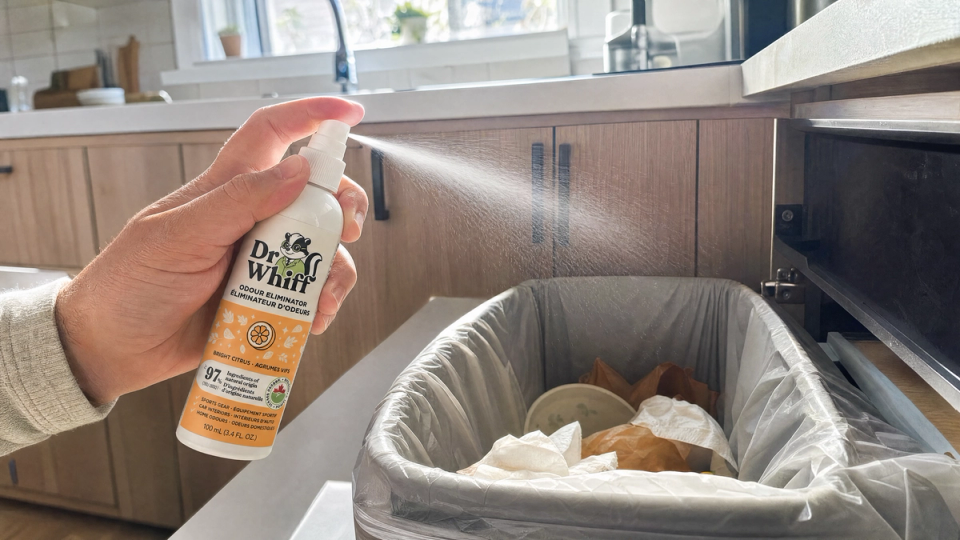
The reason cleaning alone does not hold is that it rarely treats the source surface. Because Dr. Whiff uses beneficial bacteria cultures to break odor down where it lives, it keeps working after it dries instead of fading like a fragrance, and it is at least 97% naturally derived. That is the step that finally stops the cycle. Learn more on our odor science page, or find your scent to get started.