
A smell is a clue, not a mystery. Almost every odor in a home traces back to a small list of sources, and once you know which one you are dealing with, removing it becomes simple. The reason so many smells feel impossible is that people treat the air instead of the source. Here is what is actually behind the most common household odors.
Bacteria are behind most "body" and "damp" smells
This is the big one. Fresh sweat is nearly odorless. The smell appears when bacteria on skin, fabric, and surfaces break sweat and body oils down into pungent compounds. The same thing happens with the damp towel on the floor, the gym shirt in the bottom of the bag, and the running shoes by the door. The smell is a byproduct of bacteria feeding on organic matter in a warm, moist place. Remove the food and the moisture, and the smell loses its fuel. This is exactly why we cover smells in clothes that will not wash out and gym bag funk as their own topics.
Moisture and mildew create that "musty" note
Musty smells come from microbes thriving in damp, low-airflow spots: basements, closets, bath mats, and the inside of a car after a wet week. They release earthy, musty compounds that are detectable at astonishingly low concentrations, which is why a slightly damp closet can smell off long before you see anything. The fix is always the same order: reduce the moisture, increase the airflow, then neutralize what is left.
VOCs: the smells you cannot see
Volatile organic compounds are simply molecules light enough to evaporate into the air at room temperature. Plenty are harmless, but they are why cooking, smoke, paint, and new materials all have a smell. Some everyday products add VOCs to your air on purpose, including many scented air fresheners, which is worth knowing if your goal is a genuinely clean-feeling home. More on that in Are Air Fresheners Toxic?
The usual suspects, by room
- Kitchen: food residue in the trash and disposal, plus cooking compounds like the sulfur molecules from garlic and onions, and amines from fish.
- Bathroom: damp towels and mats, and humidity that never fully clears.
- Bedroom and living room: sweat and oils absorbed into mattresses, pillows, and upholstery over time. See how to deodorize a mattress and upholstery.
- Entry and garage: shoes, pet areas, and gear that came home damp.
- Car: a sealed box of fabric and a recirculating air system, covered in how to get the smell out of your car.
Why "spray and hope" rarely works
If the source is bacteria feeding on residue in your couch, perfuming the air does nothing to the couch. The smell returns on schedule. The durable fix is to remove the source where you can (wash it, dry it, take out the trash, replace the filter) and then neutralize the odor that remains at the surface, rather than masking the room. We explain the difference in Neutralizing vs. Masking.
How Dr. Whiff helps
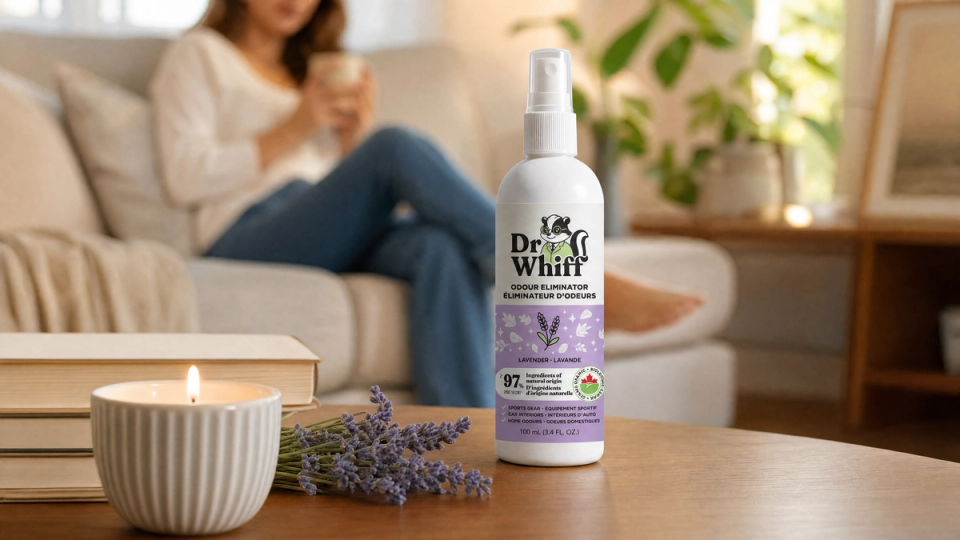
Because Dr. Whiff uses beneficial bacteria cultures to break down odor-causing molecules at the source, it is designed for the fabrics, surfaces, and air where these everyday smells actually settle, with a formula that is at least 97% naturally derived. Once you have identified the source, neutralizing what is left is the easy part. See the full Dr. Whiff lineup to get started, or learn more on our odor science page.